
Turn Mechanisms into Standalone Workcells
ESMind Logic Motion introduces a portable motion-control package for rapid deployment of compact, task-ready automation workcells that can complete tasks independently and report completion.
Assign the task. Executes it. Get a Done signal.
No coding - No software license - Run independently
SelecStep Workflow
Structure your ideas into a logical sequence of actions.
Simulator
Test the workflow before running it on real hardware
Standalone Embedded Control Core
Execute the workflow on motors, sensors, relays, valves, conveyors, and automated mechanisms.
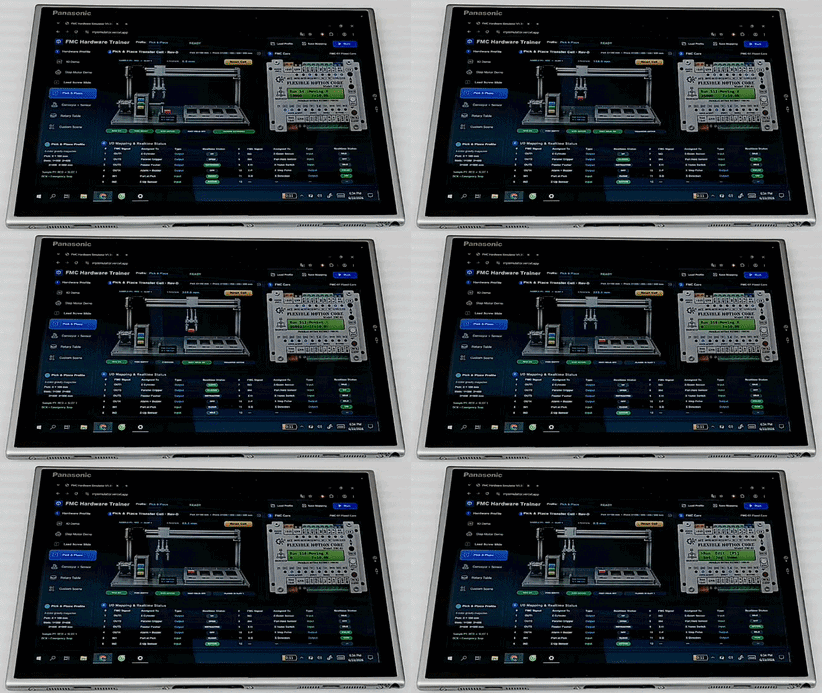

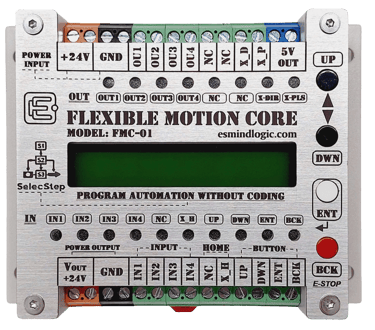
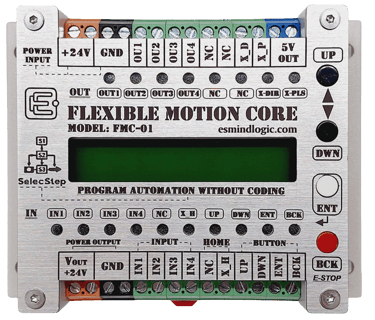
Portable motion control package
A full-stack workflow-to-hardware package consists of three integrated layers: Workflow, Simulation, and the Embedded Control Core.
Standalone Automation Workcells
Rapid build and modify sequence-based machines like conveyors, indexing tables, and pick-and-place lines without complex PLC programming.
Add-on Task Module for Existing Systems
Add workcells to an existing machine or control system. Trigger stored programs through input masks, let FMC execute the task locally, and report completion by output.


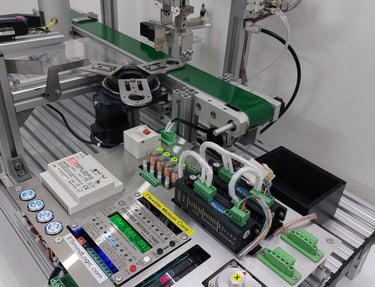
Designed for Flexible Motion/I/O Deployment
Embedded Control Core in Action: Standalone Workcell
See how an embedded control core executes real motion/I/O tasks on a standalone automation workcell.

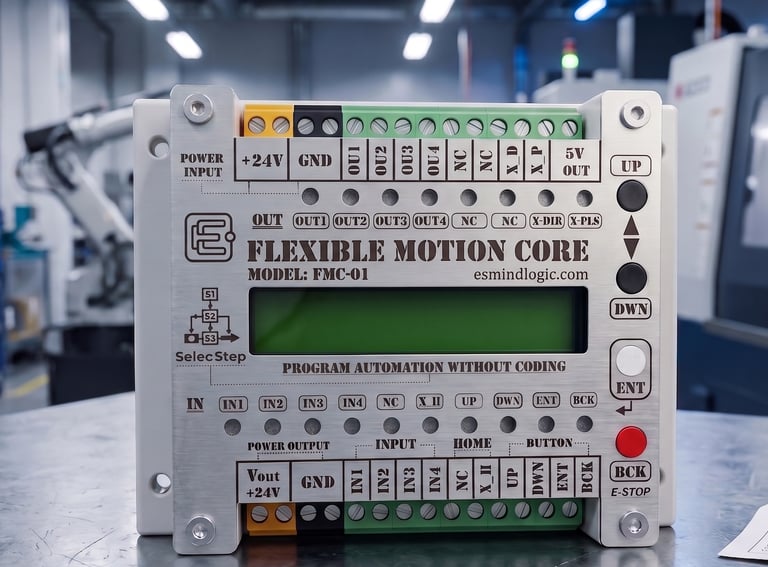

A Bridge from Idea to Real Motion
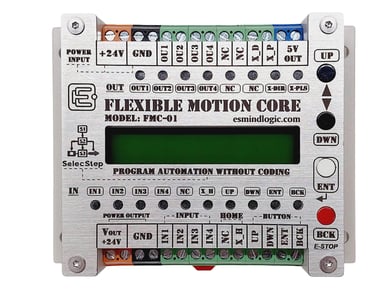


A Fast Track from Workflow to Real Motion
Contact us to discuss demos, education kits and pilot applications.
contact@esmindlogic.com
Subscribe to our newsletter
Core architecture under patent filing.
SelecStep/FMC is not a certified safety system. System-level safety design and validation remain the responsibility of the integrator